Sunday, July 31, 2016

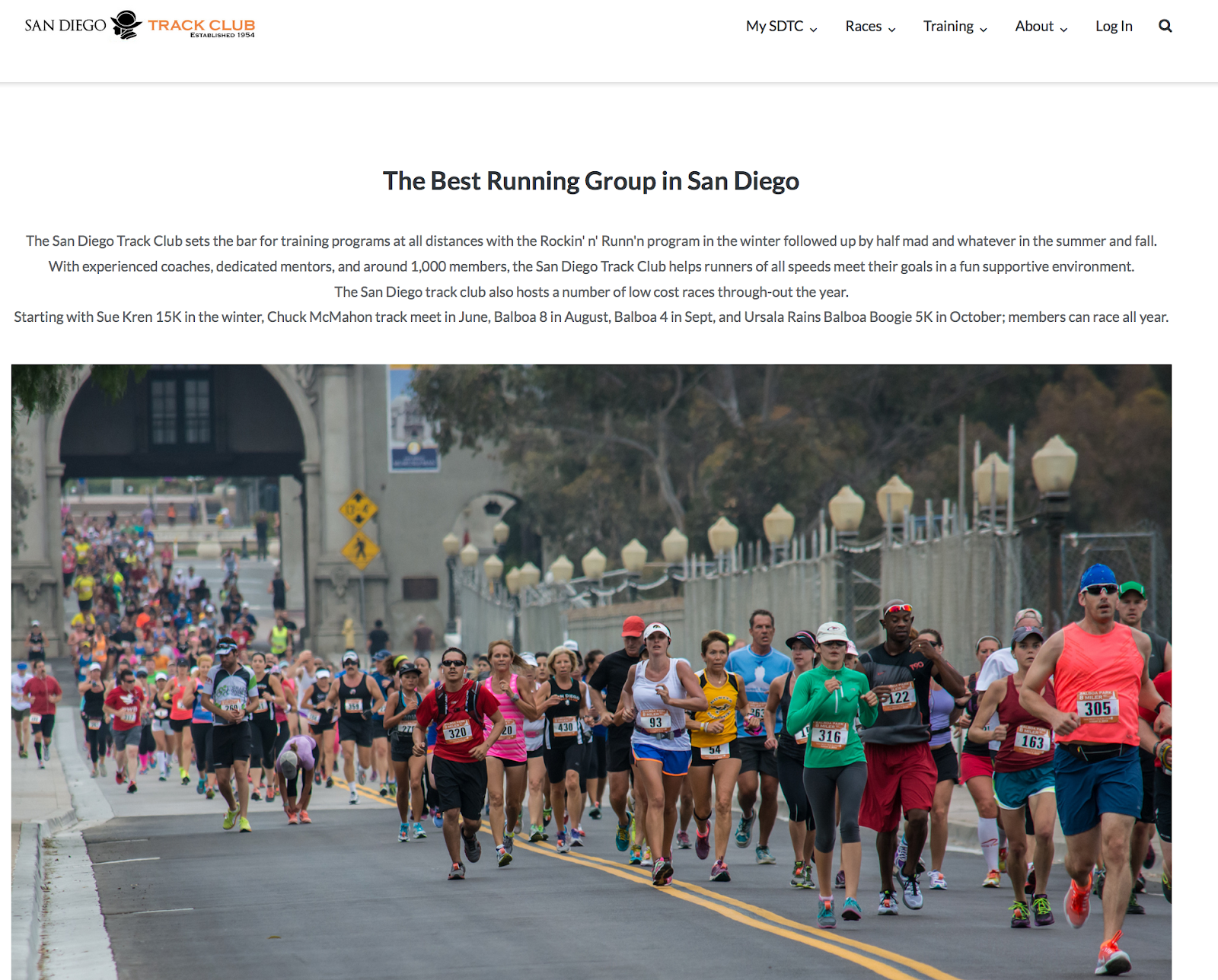
SDTC Website Upgrade

SDTC Website Upgrade
SDTC Blog Post
By: Pat & Jessie McBride

Some of you have heard rumors,
Others are hearing this for the first time:
SDTC is getting a website upgrade!!!

Screen Shot 2016-07-31 at 8.43.59 PM.png

The SDTC tech team has been working hard behind the scenes to develop a brand new SDTC website…and we need your help!

Temporary website: https://sandiegotrackclub.org
Email feedback to: webadmin@sandiegotrackclub.org

We would love to hear your thoughts on and ideas for the new website. Your SDTC membership is already loaded on the new site; use the “forgot password” tool to set your password and access your account.  

Check it out at its temporary web address (eventually it will be sdtc.com) and send us your feedback!

Screen Shot 2016-07-31 at 8.49.55 PM.png


Thursday, July 21, 2016

Rockin’ ‘N’ Runnin’ 2016 (Part 1 of 2)

Rockin’ ‘N’ Runnin’ 2016 (Part 1 of 2)
SDTC Blog Post
By: Ellen Fleischman
RNR Logo.jpgWow!  That is what went through my head as I turned a corner downtown and heard music, the roar of cheering, and Coach Paul speaking to the crowd through his megaphone, excitedly saying something like, "you did it!" and "you make a difference in my life!".   How did he get there?  It seemed like I had just seen him in North Park around Mile 8!  Although it felt like the longest finish line ever, with many turns and blocks to go before the actual finish line, it was exhilarating!

My Rockin' N Runnin’ training journey started the summer before, when a guy came to our Tuesday night Balboa Park evening run with an offer to sign up for the San Diego Rock & Roll marathon or half marathon for $69.  You would even get a free Rock & Roll towel!  I had recently started running with San Diego Track Club (SDTC) regularly and didn't really know anybody.  I had been running on my own, with an occasional 5K for many years. The idea of doing a half marathon and maybe a marathon a year away piqued my attention.  When Jomel Fampulme said "you can always sign up for the full and drop down to the half later,"  I signed up!  I wasn't sure I could really do the full marathon, but I had a year to figure it out...

I did the Shamrock Marathon in Virginia Beach in 1994 but had trained on my own.  I had tightness in the right iliotibial band (ITB) while training, but I ignored it.  So in that marathon my ITB completely tightened up at Mile 18, and I ended up having to walk a couple miles.  I was really disappointed and decided that one marathon was enough.  I was worried the same thing would happen again.

I did the SDTC's Half Mad summer program and the fall Whatever training programs and met some great people. By the time the Rockin & Running program started, early Saturday runs were part of my routine, and I was really enjoying the social aspects of training with a group.
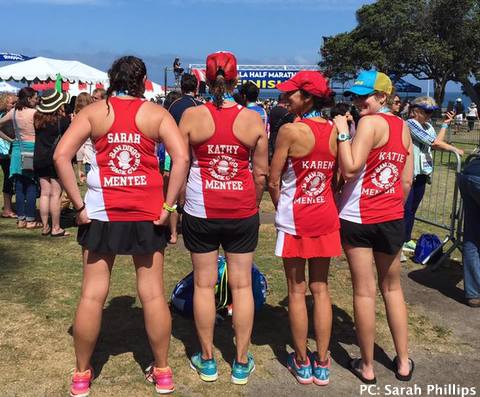
Sarah Phillips.jpg
What a great experience the Rockin’ N Runnin’ Training Program was!  I signed up to have a mentor, and it was great to be able to email Tim Dock with questions that came up.   He was  always helpful and encouraging.  I really liked that the training schedule and courses were planned out for us - even warmups.  We just had to show up and (maybe) study the map to see where we were going. There were always cheerful, helpful volunteers at the water stations, which helped a lot. Training with a group was so different than doing long runs by myself!

I had a setback with an acute back injury about a month and a half before the marathon and had to skip several long runs.  I was really worried that my training was over, but I got a ton of support and advice from my fellow runners, my mentor, Robb Latimer the sports massage guy, and the various practitioners from whom I sought treatment.  I was so excited when I felt great in our last long run before the marathon- I was going to be able to do it!

At the Tuesday night workout after the Boston Marathon, it was really inspiring when Coach Paul had the runners line up and share a few words.  They looked so happy!  Same thing after the Mountains 2 Beach Marathon, the week before Rock & Roll.  Their smiles and sense of accomplishment stuck with me - I would (maybe?) feel this way in a week after Rock & Roll!

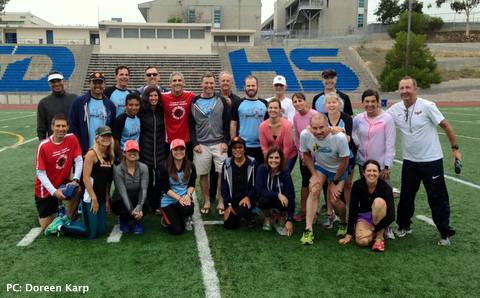
13346755_10206379204462063_5229688147900053117_n.jpg

The Friday night spaghetti dinner was a great way to end the training program - food, fellowship, and speakers.  Coach Paul reminded us that less than 1% of the population could and would do what we were about to do.  I drove the course the next morning to prepare myself mentally.  I was ready!

Race morning I had everything lined up and ready to go, but when I got to my car at 4:30 am it wouldn't start!  I didn't panic and caught a ride with my neighbors, who I knew were going.  They were in a much later corral, so I ended up barely making it to the start in time to check a bag and go to the bathroom.  I squeezed into the corral, and only a few minutes later,  the gun went off and we started!  I got into a groove, using the advice I had received about not starting out too fast.  My mentor, Tim, had told me to break the race into segments and only think about the segment I was on.  That was great advice!  I broke the course into 9 mile segments.  The first segment was great - North Park, Hillcrest, and Mission Hills - so many enthusiastic people in the neighborhoods!  There seemed to be SDTC people everywhere also, cheering, and I even saw Doreen Karp snapping photos of all of us!

The part that I called segment 2 was tough mentally - Morena Blvd, Mission Bay, Friars Road - long, flat, not exciting.  Someone had a sign that said "if you aren't fainting or dead, keep running".  Although I was never really tempted to walk, I kept that in my head the rest of the race.
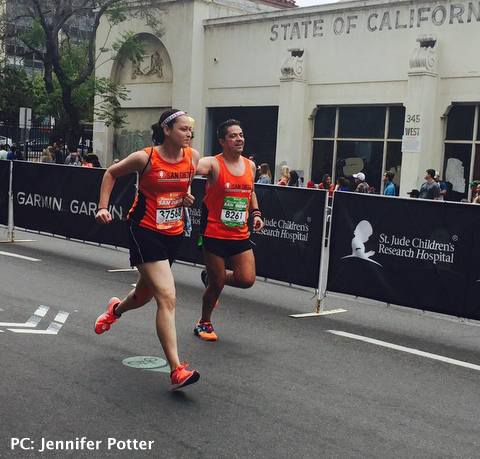
Jen Potter 3.jpg
We had heard from several speakers about the mental aspects of the marathon.  One said that the marathon is 50% physical and 90% mental - huh?  Anyway, the previous day I got a bunch of motivating messages from people who had done Mountains to Beach, including "you are strong" and "you got this".  I had these in my head like a mantra, repeating them to myself.  I had made a pace band that I laminated, and I was three minutes ahead of my goal pace for a 3:50 finish.  I was feeling great!

Then I got to Segment 3, which included the 163 freeway, starting at Mile 21.  I expected it to be hard, but it was so much harder than I expected.  I feel pretty strong on hills normally, but I got really discouraged when I saw the pace on my watch.  Somewhere near the worst part of the 163 I saw Jacob Fischer and his brother Nate Romero from SDTC.  Seeing them gave me a boost to push the rest of the way.

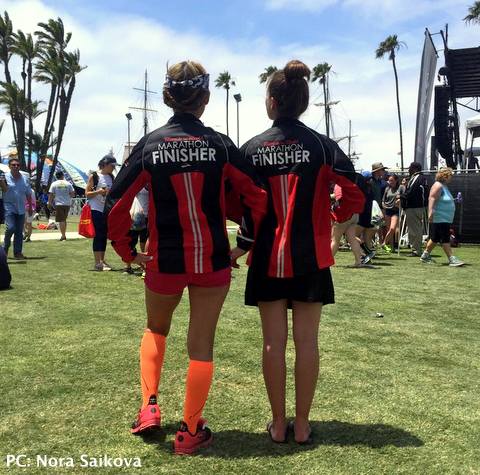
The part after the 163 was a blur.  I honestly don't remember anything until I got to the part where I could hear the crowds.  I didn't meet my goal of 3:50, but I was very happy to end up with 3:52:01  - a PR and a qualifying time for Boston!  I know that I could not have done this without all the support of SDTC.  I had fun and have met so many great people.  I'm happy to be doing the Half Mad and Whatever training programs again, and I am really excited about going to Boston.  It may feel corny when Coach Paul tells us to tell the person next to us that they make a difference in your life, but the SDTC people really do!

Nora S 1.jpg

Tuesday, June 14, 2016

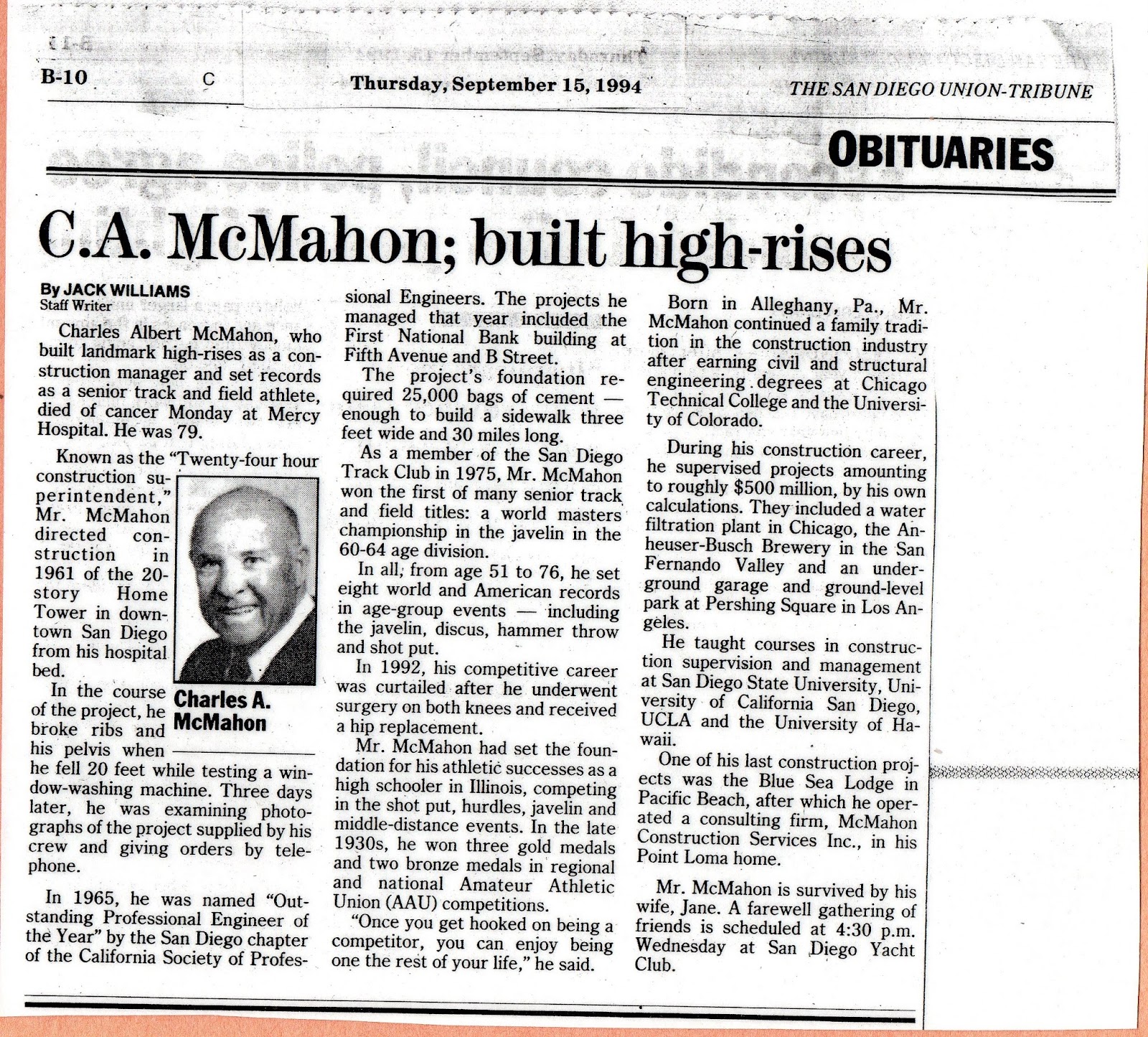
Chuck McMahon Memorial Track Meet

Chuck McMahon Memorial Track Meet
SDTC Blog Post
By: Jessie Carey McBride


 Chuck McMahon Memorial Track Meet
 Saturday, June 25th
 CSU San Marcos

Who is Chuck McMahon? Why does he have a Masters track meet named after him, and what does any of this have to do with SDTC? Those are great questions! Let me tell you a little bit more about each….


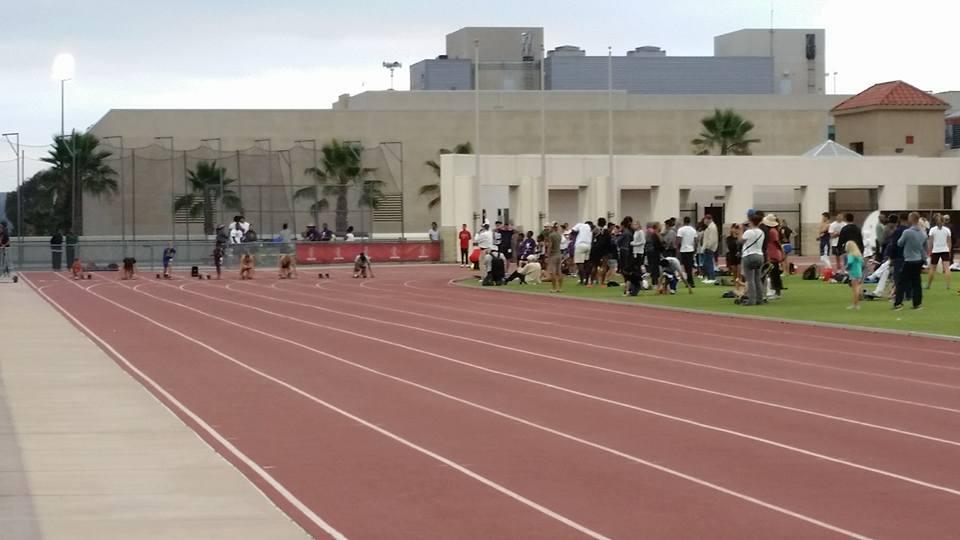
img003.jpg

The Man

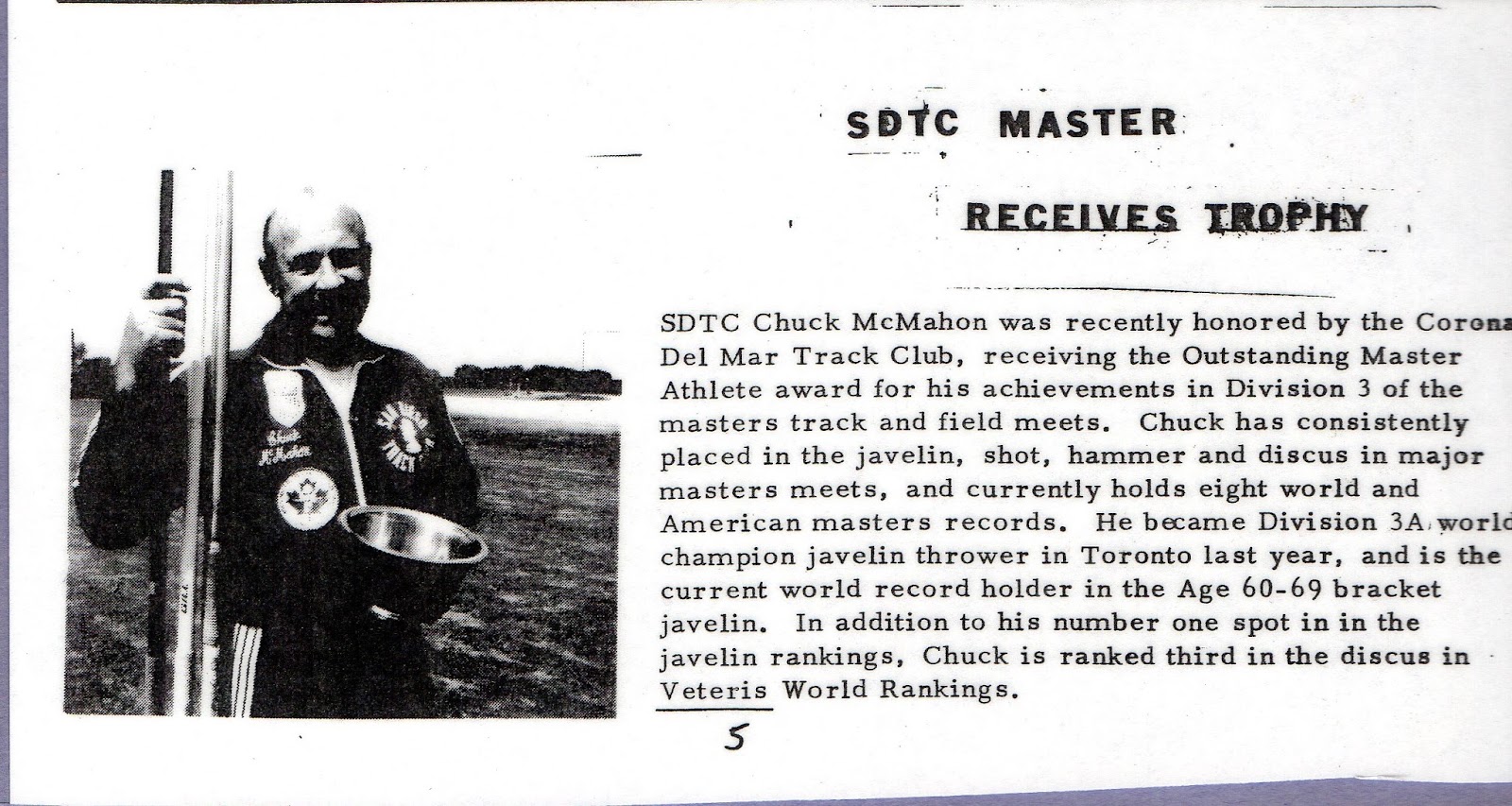
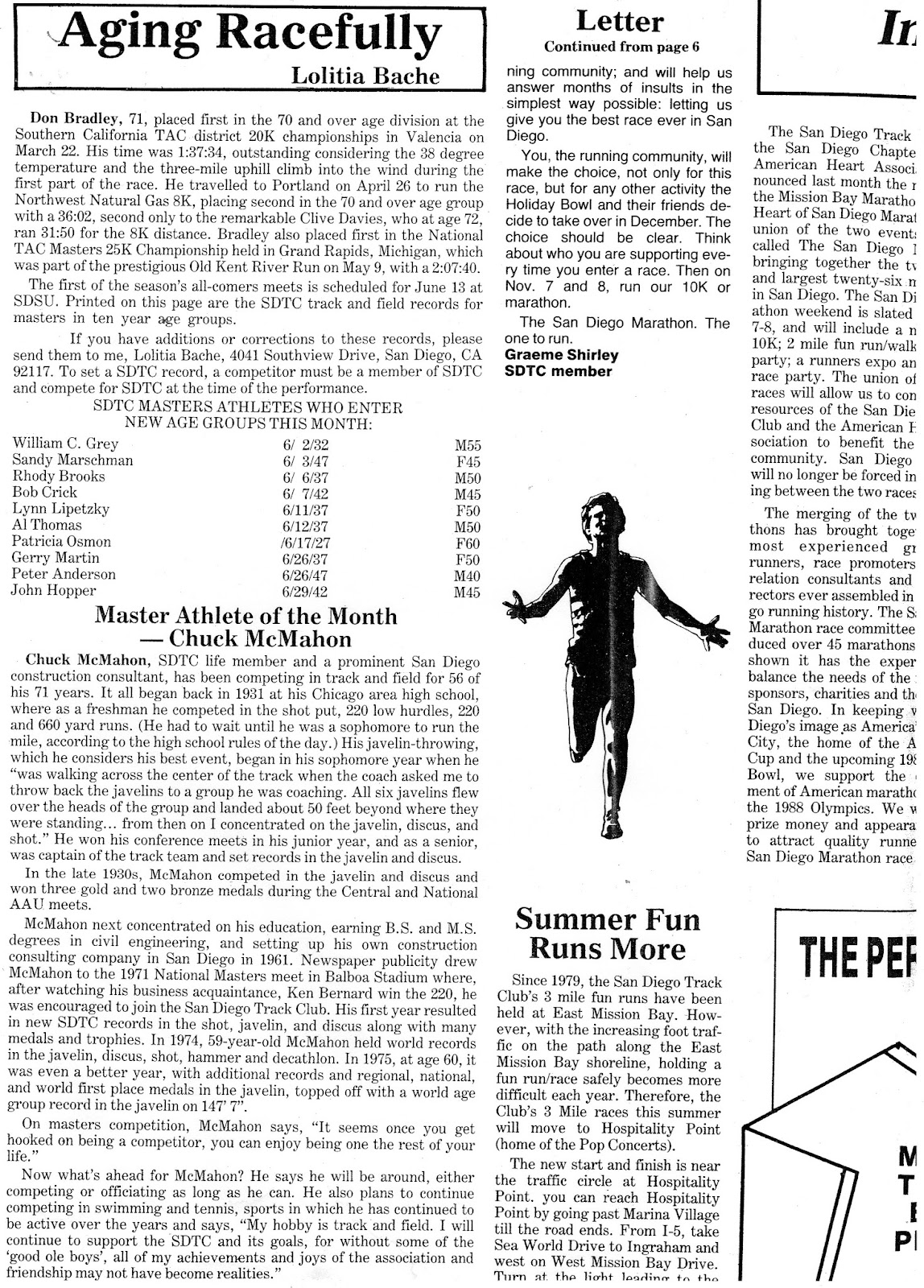
Chuck McMahon started his track & field career as a young man, growing up in the Chicago area. He won a number of regional and national medals, and was named captain of his high school track & field team in his senior year.


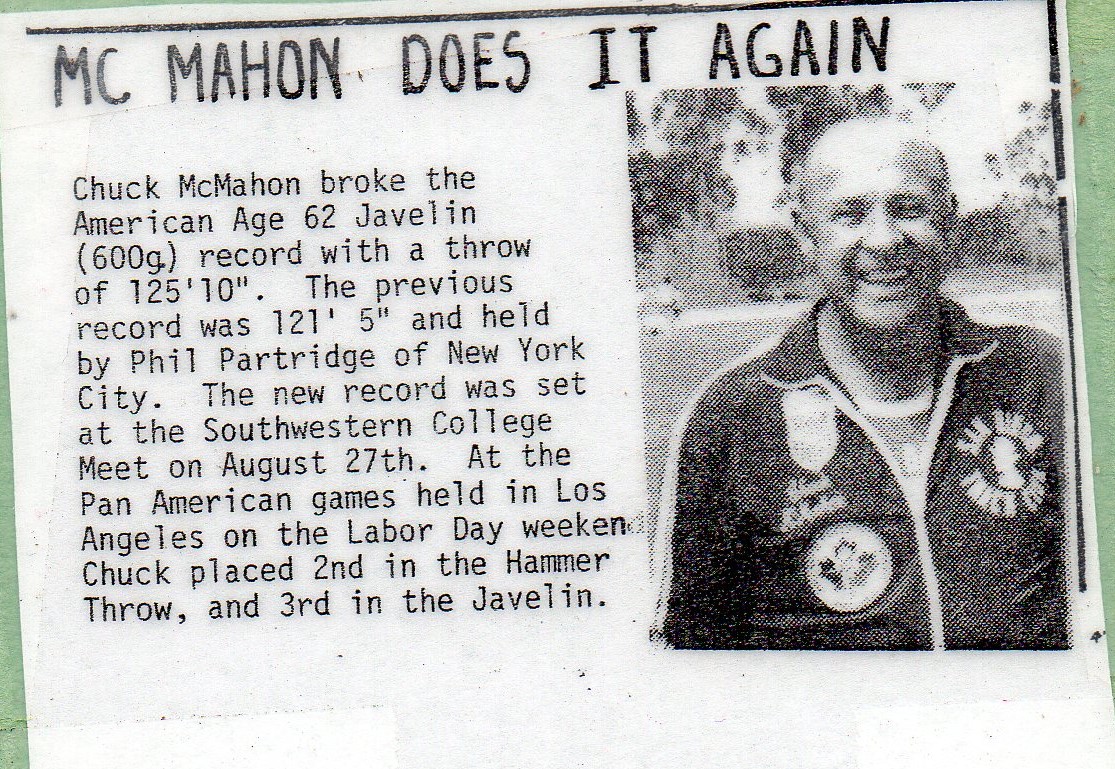
As an adult, McMahon settled in Southern California, where he had a successful career in the construction industry. He continued to pursue his love of track & field, and discovered a particular talent for throwing events. He threw shot put, discuss, javelin, and hammer, and won a variety of medals and titles in each. As a Masters athlete, he set an number of American and World records in the throwing events.
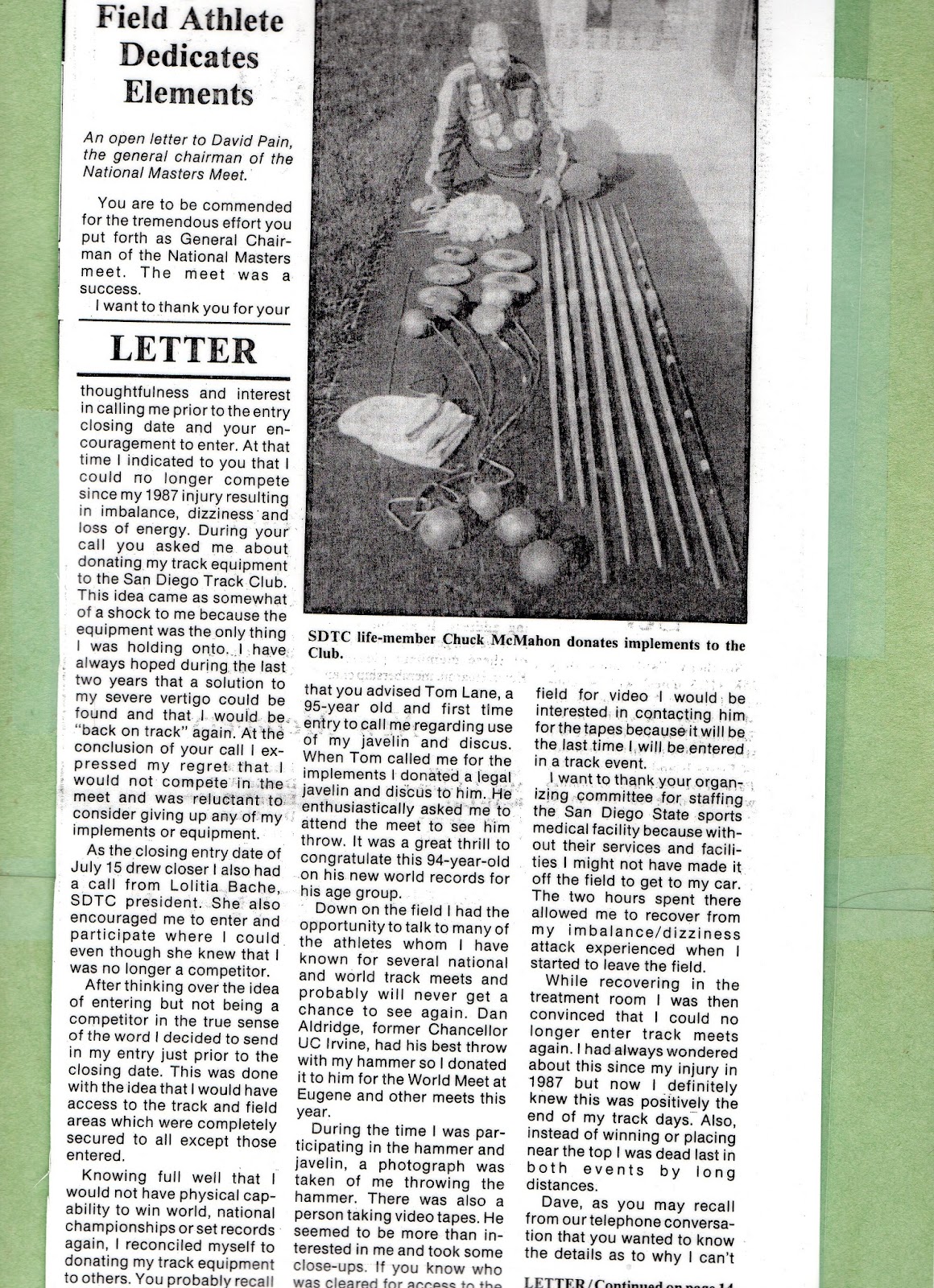
Chuck McMahon was a lifetime member of San Diego Track Club, and when we was no longer able to complete due to his health, he donated his equipment to the community.


For more information about Chuck McMahon, see the articles at the end of this blog post.

img004.jpg

The Meet

When McMahon passed away in 1994, he left an endowment in his will to promote Masters track & field in San Diego. This endowment allowed San Diego Track Club to create the Chuck McMahon Memorial Track Meet. The meet, which started in 1999, serves as an opportunity for runners ages 30 and up to compete in a variety of track & field events.


Medals (who doesn’t love medals?!?!?) are awarded to the top three finishers in each five year age group, so there are lots of opportunities to place! The meet doubles as the San Diego Imperial Association Masters Outdoor Track & Field Championship. Participants must be USATF members to receive Association awards (but not medals).


Ranging from McMahon’s own beloved throwing events to a variety of short- and middle-distance running events, the meet has something for everyone. Below is an approximate event schedule for this year’s meet.


Track Events
Field Events
8:00 AM
5000 m Racewalk
9:00 AM
Hammer Throw
9:00
5000 m Run

Shot Put
9:40
Short Hurdles 80/100/110 m


10:00
One Mile
10:00
Discus (follows hammer)
10:30
400 m

High Jump
10:50
100 m

Long Jump
11:15
Long Hurdles 200 m/300m/400m

Women’s Pole Vault
11:45
50 m (non championship)


12:00 PM
800 m
12:00 PM
Triple Jump
12:30
200 m

Men's Pole Vault (follows women's)
1:00
2000/3000 m Steeplechase

Javelin (follows discus)


This meet is a great opportunity to try track & field for the first time, brush up on the race you ran in high school, and possibly earn a medal or two! Hope to see you out there!


For more information on the meet, check out the event website: http://www.chuckmcmahonmeet.com/


Additional Articles

Article in the SDTC News, June 1987:
SDTC news June 1987.jpg


Equipment Donation:img006.jpg


Obituaries:
obit- mcmahon.jpg

img005.jpg

Tuesday, June 7, 2016

Summer Nights Track Meet


Summer Nights Track Meet
SDTC Blog Post
By: Liz Hubert & Jessie Carey McBride


Have you ever wondered how you stack up against Olympic greats like Usain Bolt, Mo Farah, or Allyson Felix? Do you want to know how your 40-year-old self compares to your 14-year-old self? Want to see if you can beat your speedy friend in a 400m race? Then the Summer Nights Track series is the opportunity you’ve been waiting for!


These all-ages track meets give everyone the chance to release their inner track star!  With running events ranging from the 100m to 10,000m, there is a race for everyone. No experience or qualifications required. You may even catch a glimpse of Coach Paul’s father running his infamous kilted 100!

If field events are more your thing, you can try your hand at pole vault, high jump, discus, or even javelin. Events offered vary by meet, so be sure to check out the schedule in advance to find your favorite event.

The cost is $5 per event in advance, or $7 day of. There are no additional membership fees or dues required, you just need to show up and run! Your entry fee may get you some cool race swag too!

Not feeling your inner track star? No problem! Everyone is encouraged to attend (for FREE!!!) to cheer on your friends and teammates! It is a fun evening and a great chance to get some fresh air, check out the local talent, and collect some free vendor samples.

Join us for some or all of the meets and invite your friends and family out to cheer you on as you run under the lights at Summer Nights Track!


~~~~~~~~~~~~~~~~~~~~~~~~~~~~~~~~~~~~~~~~~

Cost - $5 per event if you pre-register (http://www.athletic.net/), $7 day of registration


Wednesday, June 8, 2016
University City High School
Contact: Jim McCarthy at gimimac@sbcglobal.net

Wednesday, June 22, 2016
San Diego Mesa College

Wednesday, July 13, 2016
Kearny High School
Contact: Sheila Burrell at sburrell@mail.sdsu.edu

Wednesday, July 20, 2016
Sweetwater High School
Contact: Tim Latham at robert.latham@sweetwaterschools.org


Thursday, May 19, 2016

Fueling Resistance

Fueling Resistance

Six Nutritional Keys to Optimizing Immune Function

By: Kimberly Mueller, MS, RD, CSSD

In order to maintain health and perform well throughout the duration of a racing season, it’s essential to properly fuel the immune system. While the runner lifestyle is generally favorable for the immune system, helping enhance immune resistance, some studies have shown long periods of exhaustive exercise, common during marathon training, to heed the opposite effect, leaving the runner suffering from slow recovery times, frequent infection, and poor performance. Fortunately, being proactive on the nutrition front will help keep your immune system and overall performance running at peak when preparing for different races. In this article, I offer 6 keys to optimizing immune function.

1.     Eat a rainbow of color every day

Each meal plate should contain foods providing plenty of color, fruits and vegetables and particularly those with a deep hue. Fruits and vegetables are loaded with plant-based nutrients called phytonutrients and antioxidants, which help protect our immune cells from harmful oxygen molecules called free radicals. Studies have found that individuals consuming at least 5 servings of fruits and vegetables each day, are able to produce more natural killer T-cells (the type that destroy the pathogen) and virus-killing lymphocytes, ultimately helping to reduce the incidence of infection by 50% each year compared to those not so keen on color in their diet.

2.     Strengthen the flavor of your next meal with garlic and onion

Garlic and onion contain the common compound allyl sulfide, which as been shown to increase levels of infection-fighting white blood cells, boost natural killer T-cell activity, and enhance the efficiency of antibody production thereby helping to fight off the common cold and other infections. Furthermore, laboratory studies have demonstrated that sulfur compounds within garlic help regulate inflammation by inhibiting the activity of inflammatory enzymes. Preliminary evidence, primarily from animal studies using aged garlic extract, suggests that this may benefit the health of the musculoskeletal system during training. For optimal immune and anti-inflammatory support, consume 1 chopped garlic clove daily or use a standardized extract at a dose of 600-1200 mg split into 3 doses daily and/or eat 1 medium onion each day. Just remember to bring the breath mints!

3.     Boost your zinc intake

One of the most common nutritional deficiencies among American adults, especially vegetarians, is zinc, which is unfortunate for the immune system. Zinc not only increases the production of white blood cells, which help recognize and destroy invading bacteria and viruses, but it also helps enhance killer T-cell activity which helps reduce risk of cancer and other infection. Zinc is found extensively in beef products; a mere 3-ounce serving contains 30% of the Daily Value for zinc. For vegetarians and non-beef eaters, zinc can also be found in oysters, fortified cereals, crab, turkey, pork, yogurts, and beans. While the current Recommended Daily Allowance for zinc in adult men and women stands at 11 mg and 8 mg respectively, many experts believe an increase in intake to 25-30mg/day is warranted during heavy training cycles as means to better support immune functionality.

4.     Fuel with carbohydrates during and after hard training sessions

Immune suppression has been noted in the 2-hour period immediately following prolonged and/or intense training. This is in part due to elevated levels of the stress hormone cortisol and a corresponding drop in lymphocyte production and T-cell activity. Dr. David Niemann, a pioneer in the study of exercise immunology, has shown consumption of carbohydrate during and immediately after training to reduce cortisol levels and maintain lymphocyte production, thereby helping prevent infection.  Thus, during long runs and harder workouts, a carbohydrate consumption of 30-60 grams per hour is recommended with doses up to 90 grams per hour being of potential benefit for those runners training for ultra-distance events.  In addition, 0.50-0.75 gram of carbohydrate per pound of (lean) body weight should be consumed as quickly as possible post-training.

5.     Don’t shy away from fungus

Mushrooms, especially shiitake, reishi, and maitaki mushrooms are a good source of beta glucan, which is a complex chain of glucose molecules that has shown promise in increasing the production and activity of white blood cells, allowing them to aggressively destroy pathogens. Some studies have shown an immune benefit with a mere ½ cup serving consumed daily.  As an alternative, a daily intake of 100-500mg of supplemental beta glucan derived from mushrooms or yeast has been shown to be effective for enhanced immune function during heavy training cycles.

6.     Add some culture to your diet

Consuming yogurt products that contain active cultures called probiotics seem to increase the amount of friendly bacteria that line the intestinal wall, helping to fight off germs that would otherwise enter and cause infection. In fact, several studies have found that daily consumption of a mere cup of yogurt containing probiotics help to reduce the incidence of the common cold throughout the year. A higher dose, aka more probiotics, seems to further protect the body against viruses. The same benefits can be obtained by drinking a fermented milk drink called kefir. When possible, try to buy/eat yogurt that is less than a week old to ensure reaping the most benefit from the active cultures. Not a fan of yogurt? Consuming a probiotic supplement with 250 million to 20 billion organisms (the more the better), containing the lactobacillus strain and in an enteric coating will optimally benefit both immune functionality and intestinal health during high volume training.


Kimberly Mueller is a Registered Dietitian, Board Certified Specialist in Sports Dietetics, elite runner, author of The Athlete’s Guide to Sports Supplements (Human Kinetics, 2013), and owner of Fuel Factor (www.Fuel-Factor.com). She has enjoyed helping fellow runners dial in their nutrition and training for optimal health and performance for over 15 years. Contact her at kim@Fuel-Factor.com 


Tuesday, April 26, 2016

2016 SDTC Boston Marathon

2016 BOSTON MARATHON


On Patriot’s Day, April 18th, the SDTC’s Boston Group of 46 runners took off with the starting gun in the 120th version of the famed Boston Marathon, this year celebrating “50 Years of Women at Boston”. It was in 1966 that San Diego’s own Roberta Gibb quietly slipped into the race and became the first woman to complete the world’s oldest continually run road race.

As is often the case with the Boston Marathon, the most difficult obstacle this year was not the Newton hills but the weather. Unanticipated heat at the start in Hopkinton had runners waiting for hours in the hot sun and pouring water over their heads before the gun went off. By the 10 mile mark, the low humidity had salty racing singlets pasted to bodies but the thought of cooling ocean breezes ahead gave hope of relief. It wasn’t to be however as those on-shore winds and increasing humidity then reversed the effects and caused chills and cramps when none had ever been experienced previously.  Paces slowed, water stations became crowded and 8.3% of all race participants (2,490) made visits to the medical tents, including some of our SDTC runners. Even the winning, elite runner’s times were the second worst in the last twenty five years.

In spite of the conditions, the Bostonians still managed to persevere and if maybe not reaching their intended goals, they came close enough to call it a “PR effort”. Still, about half of the group finished with a time that re-qualified them for the 2017 Boston Marathon and a fourth of them ran a legitimate PR. The top 4 men were led again this year by Fasil Tadesse with his PR 2:51 followed closely by Rashaad Forehand at 2:56:06, Pat McBride with a PR 2:56:38 and Jeremy Crossley with a 2:56:51. Only 45 seconds separated these three in a race with 30,000 runners! The women were led by Erica Schoeller with a 3:07, followed closely by Sarah Jerotz with a 3:08 and Lisa Ryan with her 3:10, all with a re-qualifying effort. The “Special Category” award goes to Natasha Bliss who, at 26 weeks into her pregnancy, ran the 26 miles in a 4:24, losing a close one to her “baby bump”. In the Team Divisions, the SDTC scored 8th in the Women’s Masters out of 59 teams, 10th of 74 teams in the Men’s Masters, 11th of 59 teams in the Women’s Open and 40th of 68 teams in the Men’s Open. These were all great showings in the first year the SDTC entered the team competitions. Watch out for next year!


As is always the case with Boston, performances are only a part of the total Boston “experience”, a sentiment expressed by all who look forward to making a return trip. Next Tuesday at the track, Paul will take some time to acknowledge these runners and have them share their experiences with all of you so plan on being there and catching the Boston fever that might spur you on to your own BQ. 


Monday, April 25, 2016

Skinny Cranberry Crumb Coffee Cake!!


As runners, we need fuel, pure and simple. That means we get to eat carbs, and guilt free at that! But sometimes, it can be easy to wear that badge of honor and take it just a tiny bit too far. In fact, as many new runners transition to fueling for performance and also adjust to the new, often ravenous, hunger that comes from a tough run it’s easy to pack on a few pounds. So yes, as runners, we do get to enjoy carbs, but we still need to be a little smart about it. This Berry Coffee Cake recipe is one of those lets your runner heart have its cake, and you can stay fit and trim at the same time!

Why is coffee cake so delicious?

Well, let’s start with the fact that it’s cake. Just because it’s not covered in frosting and is lacking birthday candles does not change the fact that it’s cake. It’s traditionally made of white flour, white sugar, shortening, salt, milk, eggs and butter. A small slice will run you about 250 calories, 11g fat and 17g of sugar. Not the end of the world, especially for a runner racking up serious mileage, but it can certainly be better.

What can you swap to make a leaner piece of cake?

Use partial oat flour for added fiber
Swap butter and lard for coconut oil
Ax almost all of the added sugar and used honey and OJ
Add ground flax seeds for texture, fiber and omegas
Use nonfat Greek yogurt over milk for density

Those healthy swaps earn these stellar nutrition creds on a per slice basis:

·         250 calories to 150 (40% fewer)
·         17g sugar to 6g (63% less)
·         11g fat to 7g (39% less)
·         .6g fiber to 2g (2.5x more)
·         3g protein to 4 (18% more)

Skinny Berry Crumb Coffee Cake

Crumb Cake Topping Ingredients

1/2 cup raw oats
1 tablespoon coconut oil
2 tablespoons sugar
1 teaspoon cinnamon
1/4 tsp salt
2T ground flax seeds
Cake Ingredients

1 cup pancake mix
1 cup oat flour*
1 teaspoon cinnamon
2T ground flax seed
¼ cup orange juice
1 teaspoon orange zest
3T honey
1/4 cup coconut oil
2 large eggs
1 cup nonfat Greek yogurt
1 teaspoon vanilla extract
1/2 – 1 cup cranberries
1/2 – 1 cup blueberries
*just put 1 cup oats in the blender if you’re not in the mood to buy oat flour.

Directions:

1.      Preheat oven to 350 and coat your pan with non-stick cooking spray or oil.
2.      Mix all the topping ingredients together so that it becomes crumbly.
3.      Mix the first 4 cake ingredients together in a large bowl and mix well.
4.      In a smaller bowl, mix remaining wet ingredients (less the cranberries) until well combined.
5.      Add the wet ingredients to the dry and mix well then fold in the berries.
6.      Add to prepared pan and top with crumb mixture.
7.      Bake at 350 for 30-40 minutes (mine was 35, and it could have taken a few more minutes. The center is pretty gooey, but kind of extra delicious that way too.)
8.      Note on pan size: I used my trusty casserole dish here and I actually had to measure it with a measuring tape.  It turned out to be 9×6…kind of a weird dimension. I bet an 8×8 square pan would be perfect.

For more ideas and recipes like this, be sure to check out my Color Yourself Skinny program which is included as a part of my Simple Secrets Digital Health Coaching Program (simplesecretsprogram.com) . The smallest shifts can add up to the largest results.


Enjoy!

Teresa Marie Howes
Health & Happiness Coach, BS, CPT
p: (858) 775-9005
t: @SkinnyTinis
i: @EatDrinkandbeSkinny